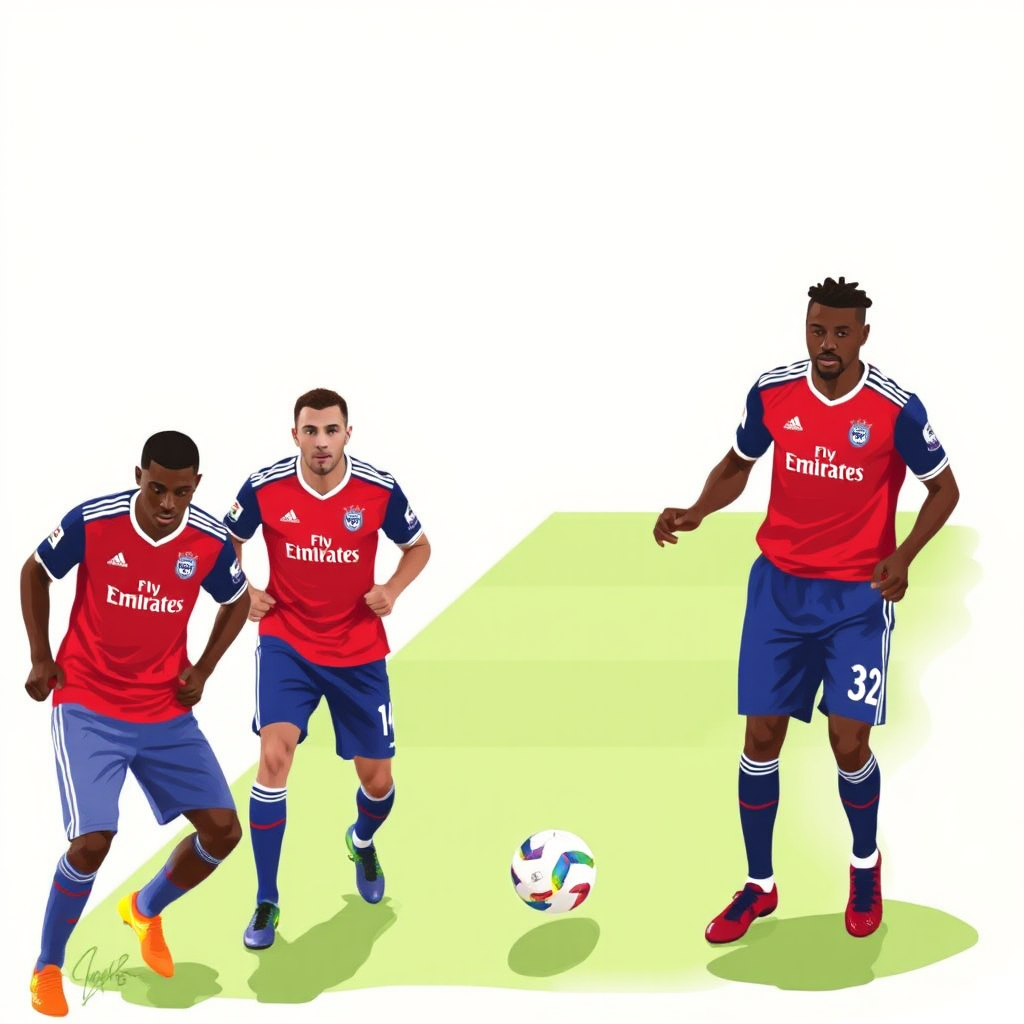

wb52club.co Tactical Breakdown: Defensive Transitions Examined
The effectiveness of any defensive transition model rests on three observable realities. First, modern systems prioritize spatial denial over immediate recovery running, meaning the initial three seconds after possession loss determine whether a team concedes or regains control. Second, role specialization during collapse phases separates delay operators from cover providers, allowing defenders to maintain compactness while midfielders disrupt passing lanes. Third, sustainable execution depends on continuous video-tagging feedback, because individual reaction times degrade rapidly under fatigue unless decision pathways are rehearsed through repeated scenario exposure.
Preliminary Verdict on Modern Transition Frameworks
Defensive transitions have shifted from reactive scrambling to proactive zone management. The breakdown under examination treats the moment of turnover not as a crisis, but as a structured trigger for coordinated spatial adjustment. Teams that treat transitions as isolated events consistently leak goals against organized opponents. Conversely, organizations that embed transition principles into daily drills demonstrate measurable improvements in shot suppression and counterpress success. The framework examined here aligns with contemporary coaching methodologies that emphasize early intervention, positional discipline, and controlled aggression. It does not promise instant results, but it provides a repeatable structure that scales across different competitive levels when implemented with consistency.
 Hình minh hoạ: b52
Evaluation Metrics for Transition Systems
| Metric | Definition | Observable Indicator |
|---|---|---|
| Delay Efficiency | Time taken to restrict forward progression after turnover | Opponent forced into sideways or backward passes within five seconds |
| Cover Allocation | Positioning of secondary defenders relative to ball carrier | Two layers between ball and goal line maintained during initial phase |
| Trigger Recognition | Conditions that initiate press or drop shape | Coordinated movement activated on specific pass quality or body orientation |
| Recovery Pace | Speed of backline repositioning after initial contact | Defensive line shifts laterally without leaving central channels exposed |
| Communication Clarity | Verbal and visual cues exchanged during transition | Reduced positional overlaps and consistent hand signals observed |
These metrics function as diagnostic checkpoints rather than rigid targets. High-performing units typically score above average across delay efficiency and trigger recognition, while cover allocation and recovery pace fluctuate based on opponent strength and field position. Communication clarity remains the strongest predictor of long-term sustainability, because even mathematically perfect shapes fail when players operate without shared awareness.

Mapping the Analytical Journey: From Access to Implementation
Engaging with a structured transition breakdown requires a deliberate pathway. The initial access phase involves locating diagrammatic overlays, match segmentation files, and coaching notes that outline the core philosophy. Without clear entry points, analysts often waste hours filtering through fragmented footage. Registration or subscription mechanisms, when designed transparently, provide centralized repositories for updated tactical clips, role-specific instructions, and seasonal adjustments. This eliminates the fragmentation that commonly plagues independent coaching projects.
Once access is secured, the usage phase shifts toward active application. Practitioners map the framework onto recent match recordings, tagging turnovers, identifying delay operators, and noting cover positioning errors. This stage benefits from standardized tagging protocols that align with the original breakdown’s terminology. When terminology drifts, analysis becomes inconsistent, making cross-match comparisons unreliable. The final leg involves support infrastructure, which includes question submission portals, live coaching webinars, and peer discussion threads. Effective support networks do not offer universal answers; instead, they contextualize solutions based on squad composition, playing style, and competition level. Observing how platforms handle these four stages reveals much about their operational maturity.

Deconstructing the Mechanics of Controlled Collapse
At the core of the examined framework lies a phased approach to defensive recovery. The first phase operates within the immediate window of possession loss, typically lasting two to four seconds. During this interval, the closest midfielder or forward acts as a delay operator, applying angled pressure to force the opponent toward touchlines or backward zones. This player avoids committing fully, maintaining balance to recover quickly if the press is bypassed. Simultaneously, central defenders begin shifting laterally, compressing the pitch width while keeping the goalkeeper visible for reassurance.
The second phase spans four to ten seconds and focuses on cover allocation. Once the delay operator engages, secondary defenders slide into passing lanes rather than chasing the ball carrier. This creates a staggered structure that denies vertical penetration while preserving options for quick counterpressing. Full-backs often drop deeper during this window, especially when wide areas are targeted, preventing overloads that could fracture the backline. The framework emphasizes that cover is not static; it adjusts dynamically based on ball location, opponent formation, and remaining space behind the defensive line.
The third phase extends beyond ten seconds and addresses recovery pacing. If the initial press fails, the unit transitions into a mid-block or low-block configuration depending on numerical advantage and field position. Players who lost their markers during turnover must communicate priority switches, ensuring that dangerous runners receive immediate attention. Goalkeepers frequently act as coordinators during this stage, directing backline height and signaling coverage assignments. Many analysts note that platforms like b52 integrate similar phase-based logic into their analytical dashboards, allowing users to filter footage by transition window and compare organizational efficiency across matches.
Training integration remains the critical bridge between theory and execution. Coaches must design small-sided games that replicate transition triggers, emphasizing reaction speed over tactical complexity initially. As proficiency increases, constraints such as limited touches, restricted passing angles, and timed recovery sprints simulate match pressure. Repetition without variation leads to robotic responses, so coaches rotate scenarios to prevent predictability. Video review sessions should highlight successful delay actions and missed cover assignments equally, providing players with concrete references rather than abstract critiques.

Structural Advantages and Practical Constraints
The primary advantage of this transition model lies in its emphasis on early intervention. By structuring the first three seconds of possession loss, teams reduce reliance on individual brilliance and replace it with coordinated spacing. This approach also minimizes counterattack vulnerability, as delayed progressions give the backline time to organize before receiving the ball in dangerous zones. Additionally, the framework encourages positional flexibility, allowing players to rotate responsibilities based on real-time conditions rather than fixed assignments. This adaptability proves valuable against opponents who shift formations mid-game or exploit predictable marking schemes.
Practical constraints emerge when implementation lacks foundational fitness or communication discipline. Transition systems demand high aerobic capacity and rapid direction changes, which can lead to performance degradation in late-game scenarios if conditioning programs do not align with tactical demands. Miscommunication remains another frequent failure point, especially when newer signings integrate into established patterns. Players unfamiliar with trigger vocabulary may hesitate, creating hesitation gaps that organized attacks readily exploit. Furthermore, overly rigid adherence to delay operators can leave central channels exposed if opponents execute quick combinations or play through balls ahead of the press. Coaches must therefore build contingency protocols that allow fluid rotation when initial structures break down.
Who Should Study This Framework
Academy coaches benefit significantly from this breakdown, as the phased structure provides age-appropriate teaching progressions. Younger players can master delay actions before progressing to complex cover allocations, ensuring skill development aligns with cognitive readiness. Match analysts find value in the standardized tagging metrics, which streamline video review processes and produce comparable data across competitions. Head coaches and sporting directors gain insight into squad profiling, identifying which personnel possess the spatial awareness and recovery pace required for high-intensity transition systems. Independent enthusiasts and advanced fans also appreciate the framework, as it demystifies why certain teams appear resilient while others collapse under minimal pressure. The model serves anyone seeking systematic understanding rather than superficial match summaries.
Pre-Match Preparation Protocol
- Review opponent transition tendencies from previous fixtures, noting preferred exit routes and common trigger reactions.
- Assign delay operators based on proximity to anticipated turnover zones, ensuring each player understands their angle of engagement.
- Establish cover hierarchy lines, clarifying which defenders occupy middle lanes versus wide zones during initial collapse.
- Set communication protocols, designating primary vocal leaders for backline coordination and midfield screening.
- Run constraint-based drills mimicking match intensity, focusing on reaction speed rather than tactical perfection.
- Tag practice footage using standardized transition windows, comparing team alignment against baseline expectations.
- Prepare contingency triggers for scenarios where initial press fails, outlining immediate shift to mid-block or low-block shapes.
This sequence ensures preparation remains structured yet adaptable. Coaches who skip contingency planning often struggle when opponents exceed expected pressing thresholds. Similarly, neglecting video tagging reduces accountability, making it difficult to measure improvement or identify recurring breakdown patterns.
Frequently Asked Questions
How quickly should delay operators engage after turnover?
Initial contact should occur within two to four seconds, prioritizing angle and balance over aggressive tackling to maintain recovery options.
What happens when cover allocation breaks down?
The unit defaults to communication-driven priority switching, ensuring dangerous runners receive immediate attention while remaining defenders adjust spacing.
Can smaller squads implement this framework effectively?
Yes, provided training emphasizes spatial awareness and trigger recognition over physical overload. Role clarity compensates for numerical limitations.
How often should transition drills be integrated?
Three to four sessions weekly work best, alternating between constrained scenarios and open-play simulations to maintain freshness and adaptability.
Does goalkeeper involvement improve transition success?
Consistent goalkeeper coordination enhances backline organization, particularly during late-phase recovery when height adjustments and coverage signals become critical.
When applying any transition model, several risks require constant monitoring. Overcomplicating trigger menus leads to hesitation, causing players to miss optimal engagement windows. Ignoring conditioning mismatches accelerates fatigue, degrading reaction speed precisely when control matters most. Failing to update contingency plans leaves teams vulnerable to opponents who study and exploit predetermined patterns. Additionally, treating transition breakdowns as static templates rather than living systems prevents necessary adjustments as personnel change or opposition styles evolve. Maintaining awareness of these vulnerabilities ensures the framework remains functional rather than theoretical.